Amazon Withdraws Four Data Centers From Loudoun County Amid Local Resistance
The tech giant will convert the 122-acre site into residential and mixed-use spaces while donating land and funds to the local government.
By Maya Sokolov ·
Amazon has formally abandoned plans to construct four new data center facilities on a 122-acre parcel in Loudoun County, Virginia, marking a significant shift in its regional infrastructure strategy. The company, which had previously submitted a proposal in July, will instead repurpose the majority of the site for mixed-use and residential development. This decision follows intense scrutiny and local opposition regarding the environmental and infrastructural impacts of expanding artificial intelligence infrastructure in the area.
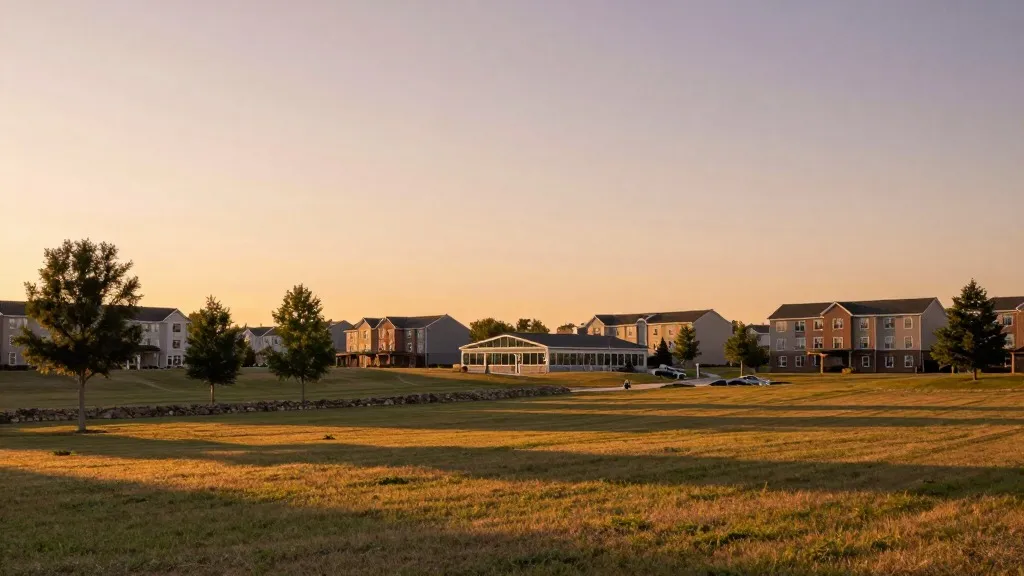
The site in question is the former campus of George Washington University, located just outside the District of Columbia. Loudoun County has become a focal point for tech expansion, often referred to as a major hub for data center concentration due to its high density of existing facilities. However, residents have voiced growing concerns about the noise pollution and the substantial energy consumption required to operate such facilities, which has strained local power grids and raised electricity costs for households.
In addition to the development change, Amazon has agreed to donate 25 acres of the property to Loudoun County. This land will be utilized for a new community arts center and recreational facility. Furthermore, the company will contribute $5 million to the county’s housing fund, an effort aimed at supporting affordable housing initiatives for local residents. These concessions appear designed to address the specific grievances raised by the community during the review process.
The path to this agreement involved direct negotiations between corporate and local officials. In September, Phyllis J. Randall, Chair of the Loudoun County Board of Supervisors, met with Amazon representatives. During these discussions, the county suggested that the company might find a more suitable alternative use for the land rather than proceeding with the data center buildout. This dialogue led to a consensus that a shared vision for the campus was preferable to a prolonged legal dispute.
Josh Weissman, Amazon’s vice president of data center development, addressed the decision, noting that the company had initially been eager to acquire the former university campus. However, he acknowledged the county’s specific concerns about building data centers at this particular location. Weissman stated that while Amazon viewed the legal development potential of the property differently, the company concluded that collaborating on a shared vision was the best outcome for all parties, avoiding the costs and uncertainties of litigation.
This withdrawal occurs against a backdrop of rising demand for data center capacity, driven largely by the expansion of artificial intelligence applications. The increased need for cloud storage and processing power has accelerated construction projects nationwide, often outpacing the ability of local infrastructure to accommodate them. Community opposition has intensified as residents grapple with the tangible effects of these facilities, including higher utility bills and concerns over water usage and land use changes.
Federal attention has also turned to the issue, with President Donald Trump recently calling for data center operators and AI hyperscalers to provide dividends to local communities in response to energy price increases. The President suggested that these facilities should generate their own electricity and sell excess power back to the local grid, a policy stance that highlights the growing intersection of tech expansion and regional energy stability.
Local officials have framed the outcome as a success of collaborative governance. Board Chair Phyllis J. Randall stated that choosing dialogue over disagreement created an opportunity for the county. She emphasized that the new agreement provides spaces for residents to gather and create, while also prioritizing the creation of more attainable homes for working families, a key objective for the local government.
The decision underscores a broader trend in which tech companies are recalibrating their infrastructure plans in response to local political and social pressures. While the demand for computational power continues to grow, the social license to build large-scale facilities in residential areas is increasingly contingent on community benefit and environmental sensitivity. For Loudoun County, the shift from data centers to residential development represents a tangible change in the area’s urban landscape and economic profile.
Looking ahead, the site is expected to undergo significant transformation as the mixed-use and residential projects move forward. The donation of land for public use and the financial contribution to housing will likely shape the next phase of development in the region. As other jurisdictions face similar pressures from the AI infrastructure boom, the Loudoun County outcome may serve as a precedent for how communities and tech giants navigate future infrastructure negotiations.
Source: Tom's Hardware · original report published