250,000 Residents Face Eviction in Hebron After Checkpoint Firefight
Israel declared a siege on the city and neighboring Halhul, ordering mass demolitions following the killing of two soldiers.
By Kaito Shevchenko ·
Approximately 250,000 residents of Hebron, the largest Palestinian city in the occupied West Bank, are subject to eviction orders following a firefight that killed two Israeli soldiers. Prime Minister Benjamin Netanyahu announced the siege on Hebron and the adjacent town of Halhul, stating that residents in the specific neighborhoods where the gunmen lived would be forced to leave.
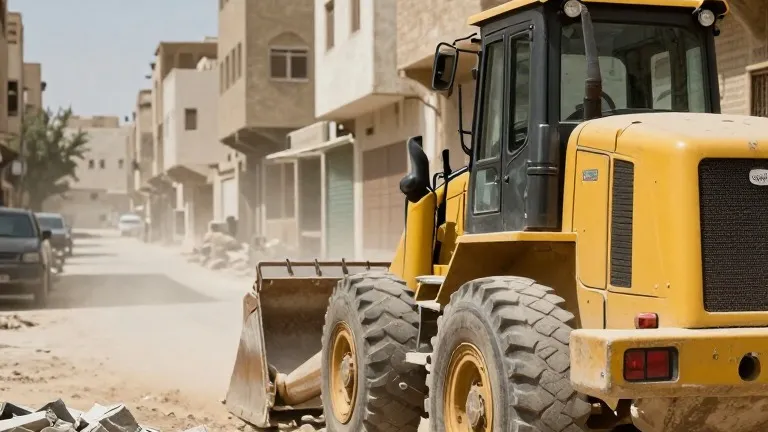
The military operation began hours after the attack, with the first home demolition commencing immediately. Finance Minister Bezalel Smotrich posted a video showing himself standing before a bulldozer as it dismantled a Palestinian home near the scene. Smotrich stated the action was intended to "create deterrence and exact a price." He noted the structure was built without permits, though no connection was established between the owners and the attackers.
Defence Minister Israel Katz expanded the scope of the punishment, promising further mass demolitions and forced displacement. He drew a direct comparison to the treatment of the Jenin refugee camp, where nearly 20,000 people have been displaced. Katz declared that every clan neighborhood from which the terrorists emerged would be evacuated. Netanyahu described the planned military operation as the largest in the West Bank since 1967, saying a date had not yet been set but that it was "on the way."
Legal challenges arose quickly after the work began. Israel's high court issued a temporary order halting the demolitions. Human rights lawyer Mohammed Dahleh filed an urgent petition on behalf of two nearby factory owners, arguing the actions breached international law regarding collective punishment. Dahleh stated, "What we saw today was an attempt to copy the illegal practices used in Gaza, in the heart of the West Bank."
Michael Sfard, a leading Israeli lawyer, characterized Smotrich's video as a "direct admission" that the demolitions constituted collective punishment. He observed that deterrence has served as a justification for such measures since antiquity. The government's strategy mirrors tactics used in other contested areas, with explicit references to Gaza by senior officials.
The Israeli military reported that two men armed with an assault rifle and a handgun carried out the attack. They were driving a vehicle with Israeli number plates and opened fire after being stopped at a temporary checkpoint outside Hebron. The gunfight lasted 20 minutes, resulting in the deaths of both attackers and the wounding of three other soldiers. An AFP photographer witnessed the exchange while traveling to another assignment, seeing two Palestinian men firing an automatic rifle and a handgun at Israeli forces.
Following the incident, prominent Israelis, including a candidate for the far-right Amcha Yisrael party, shared theories linking the photographer to the gunmen. The Foreign Press Association expressed deep alarm, calling the claims "dangerous and defamatory." The association described the photographer as a longtime professional who documented events in accordance with his duties. This event occurred one week after settlers severely injured photographer Heidi Levine while she documented attacks on Palestinians harvesting olives.
The violence in the West Bank has intensified since the olive harvest began in late September. Since the Hamas-led attacks of 7 October 2023, more than 1,100 Palestinians have been killed by Israeli forces or settlers. Polls indicate the governing far-right coalition, which supports settlers, may lose its majority in the elections scheduled for Tuesday. National Security Minister Itamar Ben-Gvir traveled to Hebron on Friday, demanding the dismantling of the Palestinian Authority and tighter restrictions on Palestinian movement.
Source: The Guardian