BBC Nature Crew Kept Cloudy Water to Prove Shots Aren't AI
Blue Planet III uses real footage of murky water and unusual animal behavior, avoiding generative AI entirely, with filming taking four years across five oceans.
By Maya Sokolov ·
If you watch Blue Planet III this winter, some of the water will look cloudy, some shots will include boats or buoys in the frame, and none of it will be computer-generated. The BBC says it deliberately kept these imperfections in the final cut to prove the footage is real. The series begins Nov. 1 on BBC1 and iPlayer, running almost ten years after Blue Planet II and 25 years after the first Blue Planet.
Filming took four years across five oceans. Jack Bootle, the BBC's head of specialist factual commissioning, told journalists at a press screening that no generative AI was used in the series: "No gen AI was used in this series. Not a single frame. It's all real photography." Elizabeth White, the executive producer, said AI "makes us want to be even more authentic" and added that animals filmed in the deep ocean "are probably more remarkable than AI could imagine and it's completely real".
White said past productions might have dropped footage with plankton in the water or reframed to hide a boat. Now those details stay in. She said the team is "really leaning into that authenticity" and plans to use even less polished images as AI use grows.
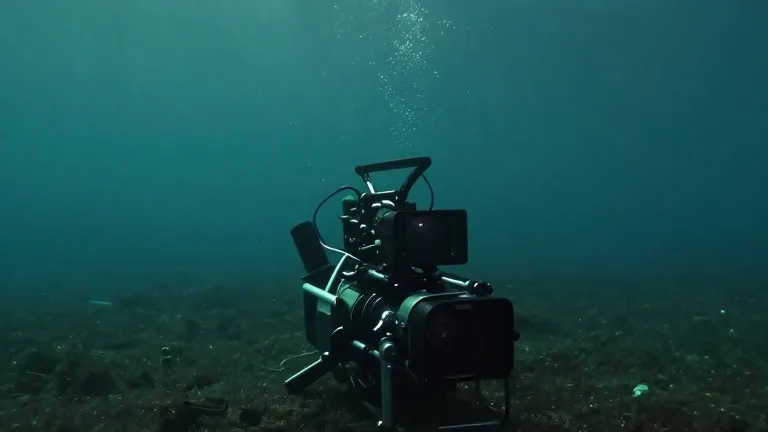
The cameras are also new. The program built an underwater CCTV rig nicknamed the "stonefish" cam, which the BBC describes as the world's first. Producer and director Yoland Bosiger developed it to record dolphins using sea sponges to plug holes in coral and trap fish. Other footage shows a grouper communicating with another species of fish, 200,000 crabs lining up to feed, and sea urchins holding shells over themselves. The unit also built a mini-dome camera to follow an octopus and a deep-sea selfie stick, and camera operators wore leg-mounted scooters.
Series producer Lara Bickerton said BBC Studios "continually innovated" during production. Bosiger said David Attenborough, who is 100, was "very much involved" and edited scripts. White said he still gets excited watching new footage.
The series also covers warming seas killing the anemones where clownfish live, along with pollutants and forever chemicals. White declined to say whether the BBC's £500m cost-cutting drive affects the unit, noting only that using more local crews on location saved money.
Blue Planet III begins on Sunday 1 November on BBC1 and iPlayer.
Source: The Guardian