Rivian absorbs UK team to rebuild 400,000 daily fleet clips into 3D test tracks
The acquisition of Third Dimension gives Rivian engineers the ability to digitally recreate rare, high-risk driving events from customer footage for autonomy training.
By Kaito Shevchenko ·
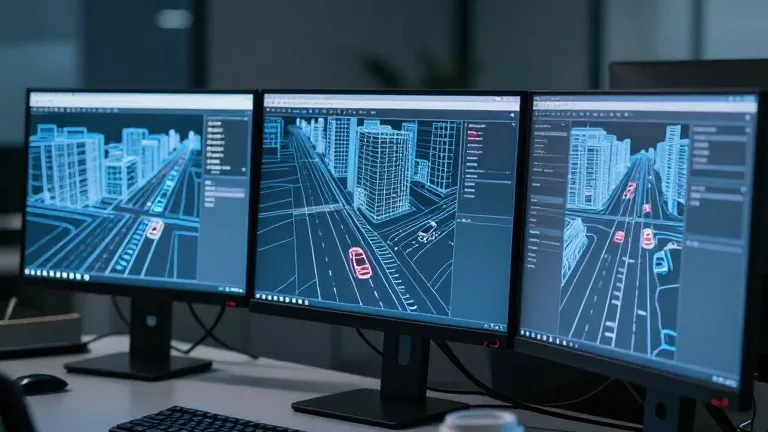
Rivian has purchased Third Dimension, a 15-person software firm based in the United Kingdom, to accelerate the development of its autonomous driving systems. The deal, first reported by TechCrunch, brings a specialized team into Rivian's autonomy and AI division. The company did not release the purchase price for the acquisition.
The primary function of the new team is to convert real-world driving footage into three-dimensional test environments. Rivian's fleet of R1S, R1T, R2, and commercial vehicles generates more than 400,000 video sequences daily from owners who opt into data sharing. James Philbin, who leads Rivian's autonomy and AI group, stated that simulation is central to training and validating these systems. He noted that the acquired technology turns real-world data into detailed 3D environments, allowing engineers to work with actual road conditions rather than purely synthetic scenarios.
The founders of Third Dimension bring specific experience from major players in the autonomy sector. CEO Tolga Kart spent more than two years at Tesla working on Autopilot simulation after a career in video game engineering. Cofounder Piotr Sokólski worked for four years at Wayve, where he helped build photorealistic neural simulators for self-driving cars. The entire 15-person staff is moving into Rivian's organization, which also increases the company's physical presence in London.
The technology addresses a specific problem in autonomy development: the rarity of critical edge cases. Most daily driving footage is routine, but the events that challenge self-driving software, such as a mattress in the fast lane or a child running between parked cars, happen infrequently. By rebuilding these specific incidents in 3D, engineers can alter variables and test system responses without waiting months for the event to recur on a real road. Philbin described the team's technology as impressive for its ability to digitize these complex scenarios.
Rivian joins other major automakers in this simulation trend. Waymo unveiled a world model based on Google DeepMind's Genie 3 in February, while Tesla has demonstrated a neural world simulator for its Full Self-Driving software. These tools allow companies to generate scenarios their vehicles have not yet encountered in the physical world.
The acquisition occurs against a backdrop of tightened timelines for Rivian's robotaxi ambitions. In March, Uber agreed to invest up to $1.25 billion in Rivian to deploy R2 robotaxis, with only $300 million paid upfront. The remaining funds are tied to autonomy milestones, including placing 10,000 driverless R2 vehicles on Uber's network in San Francisco and Miami starting in 2028. Consumer-facing features are also shifting, with point-to-point driving arriving for a small group of invited owners later this year. The company has pushed its target for eyes-off driving from 2026 to 2027, with Level 4 capability planned for 2028 on its Gen 3 hardware.
Source: Electrek