Student List Ousts Longtime Serbian Leader
Voter turnout hit a 30-year high as the youth-led coalition secured between 135 and 140 of 250 parliamentary seats against Aleksandar Vucic's party.
By Nicholas Martin ·
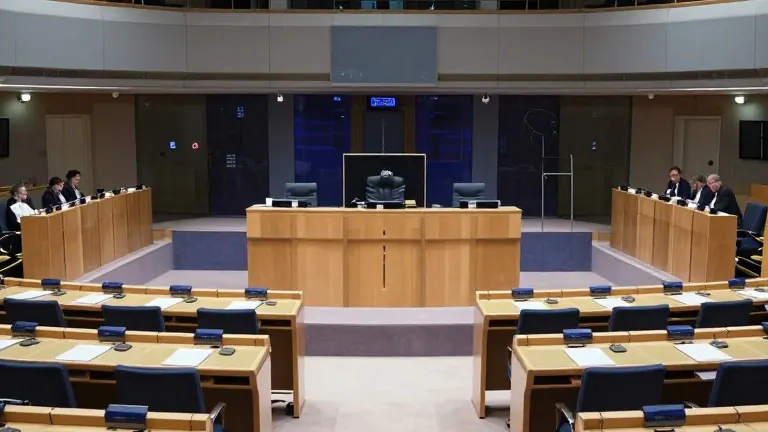
Aleksandar Vucic lost Sunday’s snap parliamentary elections to a student-led movement that protested his government for nearly two years. The outcome marks the end of his political dominance after more than a decade in power.
Vucic acknowledged the loss to supporters after early vote counts indicated his Serbian Progressive Party list would win 105 seats. The Student List is projected to take between 135 and 140 seats in the 250-member chamber. Voter turnout reached its highest level in over 30 years.
“It is clear that we have lost these elections,” Vucic told his base. The student coalition emerged from the aftermath of a tragedy in Novi Sad on November 1, 2024, when a train station canopy collapsed and killed 16 people.
Ilija Srdanovic, a professor at the Faculty of Medicine in Novi Sad, led the campaign for the Student List. The platform promised to address corruption, depoliticize public institutions, and restore citizen rights. Vucic, who has served as president since 2017 and prime minister from 2014 to 2017, had previously labeled the demonstrators as “blockaders” seeking to destabilize the country.
Vucic resigned in September under pressure from the protests and called for early elections. His term was originally scheduled to end in 2027. The Serbian presidency holds limited constitutional power, but Vucic maintained strong influence over state policy and his party.
Safeta Bisevac, a journalist who has covered Vucic’s career, noted that the leader was less popular than his co-founder Tomislav Nikolic when the Serbian Progressive Party formed in 2008. Bisevac said Vucic was essentially the organizer of the new party at the time. “He made many promises and fulfilled few of them, but in the meantime, he established almost complete control over the state apparatus,” Bisevac said.
The economic record under Vucic’s leadership shows mixed results. Unemployment fell from 26 percent to between 8 and 9 percent. Nominal gross domestic product nearly tripled to about 90 billion euros. Annual foreign direct investment rose from 800 million euros in 2012 to a record 5.2 billion euros in 2024. However, critics argue that rising wages did not match the increase in living costs.
Dusko Radosavljevic, a political scientist, said the students gave voice to justified anger among citizens. He described the past decade as marked by systematic pressure on social institutions. “State intelligence services have spent less time on their actual duties and more time monitoring political opponents while critical thinking has been pushed out of the public media,” Radosavljevic said.
Source: Al Jazeera