Tesla Confirms It Is Building Its Own Maps To Fix FSD Navigation Flaws
After years of dismissing external data, the automaker admits its fleet needs a proprietary mapping layer to handle speed limits and parking correctly.
By Kaito Shevchenko ·
55% is the rate at which Tesla vehicles were found speeding in 30 km/h zones in Brussels. This striking statistic from a recent Belgian road safety group highlights a persistent weakness in the company's Full Self-Driving system. It also serves as the backdrop for a major strategic pivot announced by Tesla this week. The company has officially stated it is developing its own mapping infrastructure to correct common errors in its autonomous driving software.
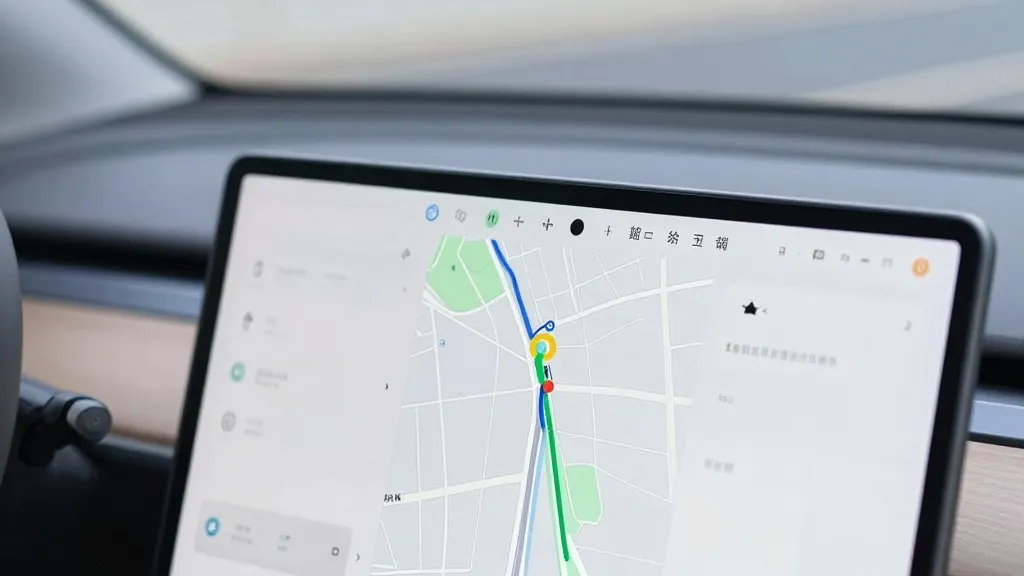
The announcement came during Tesla's Q3 2026 earnings call. Ashok Elluswamy, the company's Vice President of AI, detailed the new effort to shareholders. He confirmed that Tesla is constructing a custom map using a new AI-based architecture. This system will be fed by data collected from the existing fleet of vehicles. The goal is to move away from relying on third-party navigation data that has proven unreliable for certain driving tasks.
Elluswamy addressed a specific concern raised by a retail investor during the Q&A session. The shareholder noted that mapping issues, specifically regarding speed limits, parking, and route selection, remained significant problems. They asked why the company did not create its own maps. Elluswamy agreed that Tesla should not depend on external providers. He stated that the new system will learn individual driver preferences and respond to voice commands.
The rollout is planned in phases. The technology will initially handle the start and end of trips with the upcoming FSD v15 update. Over the following months, it is expected to take over navigation, parking, and destination handling. This gradual integration suggests a cautious approach to replacing the current navigation stack with the new internal solution.
This move marks a notable departure from Tesla's historical stance. For years, CEO Elon Musk argued that self-driving systems relying on detailed maps were brittle. At the 2019 Autonomy Day, he described high-precision lane maps as a huge mistake. He called relying on them a really bad idea that made systems extremely fragile. At the same event, he dismissed lidar as a fool's errand, insisting that cameras and AI alone could solve driving anywhere.
However, the practical challenges have led to a different reality. In 2015, Tesla actually told Fortune it was building high-precision maps with 100 times the granularity of standard navigation. That effort was later scaled back, but the core problem of understanding the environment remains. FSD still struggles with simple tasks like reading speed limit signs. In the US, the NHTSA is currently weighing an investigation into claims that Tesla Robotaxis speed through active school zones.
The new approach brings Tesla's strategy closer to that of its competitor Waymo. Waymo uses lidar-equipped vehicles to map cities before launching service and keeps those maps updated as the fleet drives. Tesla is now describing a similar model where cars collect data to build a shared map. The primary difference is that Waymo's vehicles have lidar sensors on top, while Tesla relies on a vision-based approach. This shift also aligns with how Tesla's Robotaxi service operates, which is currently limited to geofenced areas in specific cities.
The stakes are high for Tesla's reputation and its timeline for unsupervised driving. The company has pushed the release of unsupervised FSD in customer cars to Q2 2027. Critics argue that the need for a dedicated map layer undermines the earlier messaging that a general vision solution would work everywhere. By building a map from its own fleet, Tesla is acknowledging that vision alone may not be sufficient to interpret all road information reliably. This development suggests that the gap between Tesla's and Waymo's approaches is narrowing as both companies utilize fleet data to refine their autonomous systems.
Source: Electrek · original report published