Tesla Reveals Fighter-Jet Style Cockpit, Highlighting Complex Thruster Controls for Next-Gen Roadster
A new video demonstrates the intricate dashboard interface for the upcoming electric supercar, focusing on aero settings and the critical 'Boost Ready' indicator linked to its rocket-based propulsion system.
By Kaito Shevchenko ·
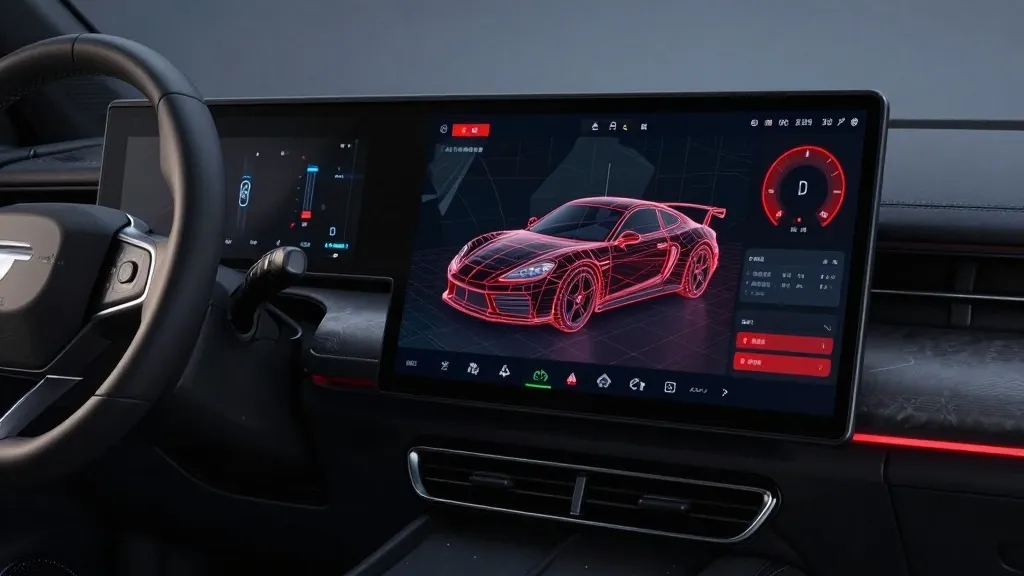
The digital cockpit of the next-generation Roadster appears less like a traditional car dashboard and more like the flight deck of a high-performance aircraft, a design choice Tesla has explicitly embraced in its latest promotional material.
In a 34-second video shared on X this Friday, the company provided the most detailed look yet at the vehicle's touchscreen interface. The footage, which features a caption stating the design is "Inspired by fighter jet cockpits, Roadster’s interface was designed around the pilot," moves away from the map-centric layouts found in Tesla’s other models. Instead, the home screen places a 3D wireframe of the car itself at the center, positioned next to the vehicle’s squared-off yoke. Interacting with this model reveals controls for the rear wing, allowing drivers to switch between low-drag and high-downforce configurations, alongside standard functions like charging limits and music playback. A bottom row of tabs organizes these features into Home, Vehicle, Listen, Climate, and Navigate sections.
The majority of the demonstration focuses on Track Mode, a suite of tools that suggests a high level of driver involvement. The display presents a live circuit map, session lap times, and detailed telemetry including brake and motor temperatures. Crucially, it provides individual pressure and temperature readouts for each tire. The setup page allows for granular adjustments, letting users select from Auto, Low Drag, High Downforce, or Custom aero modes. Drivers can fine-tune aero and brake balances, and even disable stability and traction control. Along the bottom of the screen, a status bar displays "Thruster · 5,500 PSI" adjacent to a "Boost Ready" indicator, directly linking the software interface to the car’s hardware capabilities.
This software integration references the hardware Tesla unveiled near Waco, Texas, on October 15. The Thrust and Rocket variants utilize cold gas thrusters powered by carbon overwrapped pressure vessels. Tesla claims these systems enable 0-to-60 mph acceleration times of under 0.9 seconds and under 0.59 seconds, respectively. In contrast, the base Performance model relies on a fan and ground sealing system for grip. The aero settings shown in the video align with the active wings and suction mechanisms previously analyzed for downforce generation.
The interface represents a significant departure from the rest of Tesla’s current lineup. While the Roadster’s page lists two smaller forward displays alongside the main touchscreen, the company has not indicated whether the advanced Track Mode telemetry will be ported to vehicles like the Model 3 Performance. This raises questions about whether this level of detail is exclusive to the flagship model or if it signals a broader shift in Tesla’s software approach for future high-performance vehicles.
Despite the polished presentation, the interface is not final. Elon Musk confirmed at the recent event that production is slated to begin in 2028. Furthermore, Tesla notes that the top-tier Rocket version is not yet approved for public road use. For those interested in securing a spot, reservations are open with a $50,000 payment. The Thrust version is described as a limited release, while the Rocket is invite-only, creating a tiered structure for access to the vehicle.
For enthusiasts who prefer to see the machine in physical form, the first public viewing opportunity arrives this weekend. The Roadster will be displayed in the lobby of the Petersen Automotive Museum in Los Angeles from October 24 to 27. According to Sawyer Merritt, this marks the first time the general public will be able to examine the car up close, offering a tangible counterpoint to the digital previews shown in the video.
As the release date approaches, the focus on specific PSI readings and thrust readiness suggests that the driving experience will be heavily mediated by software. Whether this complexity enhances the driving feel or adds a layer of cognitive load remains to be seen, but the current presentation leaves little ambiguity about the technical ambitions behind the vehicle’s design.
Source: Teslarati · original report published