UK families buy extra food and water as government urges three-day supply
New official guidance prompts shoppers to stockpile essentials amid warnings of state-sponsored threats and climate risks.
By Maya Sokolov ·
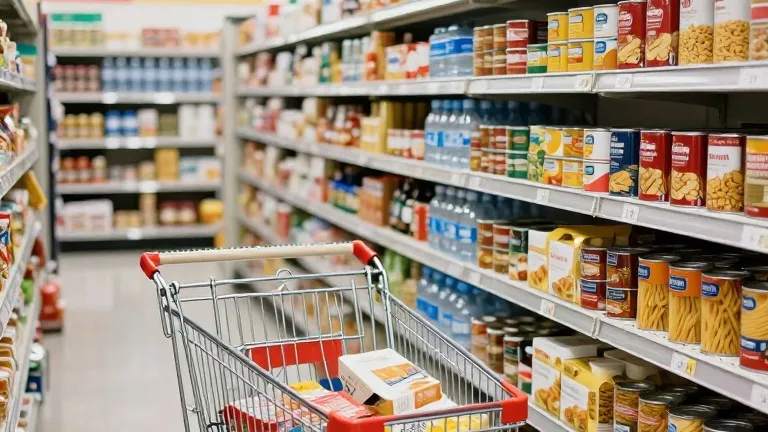
The UK government launched a campaign on Thursday advising households to store three days worth of emergency supplies. The directive asks residents to prepare for a range of potential crises, from infrastructure failures to state-sponsored terrorism. This marks a formal step up from previous ministerial signals sent over the past several months. Shoppers have already begun adjusting their weekly habits in response to the new guidance and ongoing warnings about Russian threats and climate change.
Lawrence Barratt from Hythe in Hampshire started adding dry goods to his shopping list about two weeks ago. He is purchasing beans, soups, chilli con carne, noodles, and rice. His goal is to have enough food and bottled water to sustain two people for three days. Barratt also bought a first aid kit, a battery-powered FM radio, and a torch. He uses a portable power bank that he believes can charge phones, run a television, and power a small fan heater.
Barratt said he saw the government advice online and recalled the empty shelves during the 2020 lockdown. Those memories of depleted pasta and toilet roll stocks influenced his decision to start early. He stated that the official Be Ready campaign website made him realize he was completely unprepared for any emergency.
Marco Camurri from Greenwich in London is collecting pasta, passata, stock cubes, tinned food, bottled water, and medicines. His family also keeps toilet paper in reserve. Camurri noted that relatives in continental Europe could provide temporary housing if the UK entered a conflict. He mentioned the risk of direct attacks on London or extreme infrastructure failure putting jobs at risk. The household stores wood in the garden for barbecuing and boiling water. They keep power banks charged and maintain fuel tanks above 50 percent, which allows for about 300 miles of driving. Camurri said his family began preparing a few months ago when reports linked El Nino to supply chain disruptions.
Because the family consumes what they stockpile, Camurri described the process as equivalent to buying one extra week of staples. The household is now tracking expiry dates on a spreadsheet for their Doomsday Stash. This system ensures items are eaten and replaced before they spoil.
Jack Davenport from North Shields on the River Tyne also pointed to El Nino as a reason to stockpile. He described it as difficult to judge the size of the many threats facing the country. Davenport listed climate-related disasters, Russian shadow threats, artificial intelligence, and interest rate rises driven by energy insecurity as concerns. He argued that the country's physical and technological infrastructure is creaking and outdated. Davenport suggested the government aims to reduce long-term panic by presenting these events as possible rather than imminent.
Not all residents accept the new advice. Deirdre O'Sullivan from Leicester called the guidance daft. She compared it to 1970s advice to hide under a table during a nuclear attack. O'Sullivan argued that the three-day supply looks inadequate for a genuine emergency. She stated that any danger to drinking water should be anticipated with more precision. She also noted that an extreme food shortage would likely become apparent over a much longer period.
O'Sullivan said the guidance resembles a policy created simply to demonstrate that the government has a plan. She quoted a line from Yes Minister, saying it is a policy that is clearly totally useless.
Source: The Guardian