Falcon 9 Boosters Return to California Service After Eleven-Day Pause
SpaceX deployed 27 Starlink satellites from Vandenberg Space Force Base on October 23, marking the 116th flight of the year as launch frequency drops.
By Nicholas Martin ·
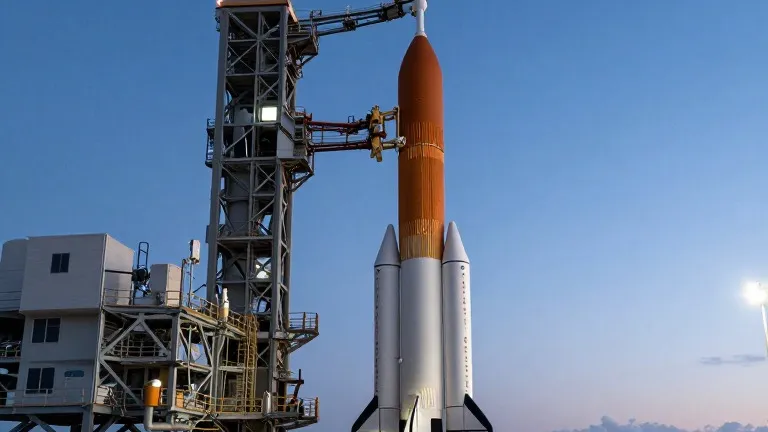
SpaceX deployed 27 Starlink satellites from the California coast on October 23, ending an eleven-day pause in its launch schedule. The Falcon 9 rocket lifted off from Pad 4E at Vandenberg Space Force Base at 3:48 p.m. local time.
The payload, identified as Starlink Group 15-15, was housed inside the rocket's payload fairing. First stage booster B1063 separated from the upper stage approximately 2.5 minutes after liftoff. The booster then reoriented for reentry and landed on the droneship Of Course I Still Love You about 20 seconds after lighting its engines for a landing burn. This marked the 36th launch and landing for the booster, which previously carried NASA's DART mission in November 2021.
The upper stage completed its initial engine burn shortly after the booster touched down. It was scheduled to coast for roughly 45 minutes before a final burn to insert the satellites into low Earth orbit. Deployment of the spacecraft was set to begin 62 minutes after liftoff.
The launch brings the total number of active Starlink spacecraft to more than 11,000. However, the frequency of these missions has decreased as SpaceX shifts development focus to its Starship rocket. Starship is designed for full reusability and features a payload bay large enough to carry Version 3 Starlink satellites, which are too large for the Falcon 9. Once operational flights begin, SpaceX plans to phase out the Falcon 9 and Falcon Heavy variants almost entirely.
The shift in launch cadence is evident in recent data. The 100th Falcon 9 launch of 2026, which carried the Starlink 10-49 group from Cape Canaveral, was the final Starlink mission from Florida's Space Coast. The previous West Coast launch occurred 11 days before October 23, a gap that followed a period of more than three weeks without a flight. At their peak, these missions flew every two to three days.
The October 23 mission was the 116th Falcon 9 flight of 2026, with approximately three-quarters of the year's launches dedicated to Starlink. The reduced pace suggests 2025, when the rocket completed 165 launches, will remain its busiest year on record. At the current rate, the rocket is expected to fly just under 150 missions by the end of the year.
Source: Space.com