SpaceX satellite network: Ukraine cites speed limits in drone defense failure
Ukrainian officials reported two deaths and 17 injuries after Starshield throttled high-speed interceptors last week, a move that has intensified debate over the company's orbital dominance.
By Nicholas Martin ·
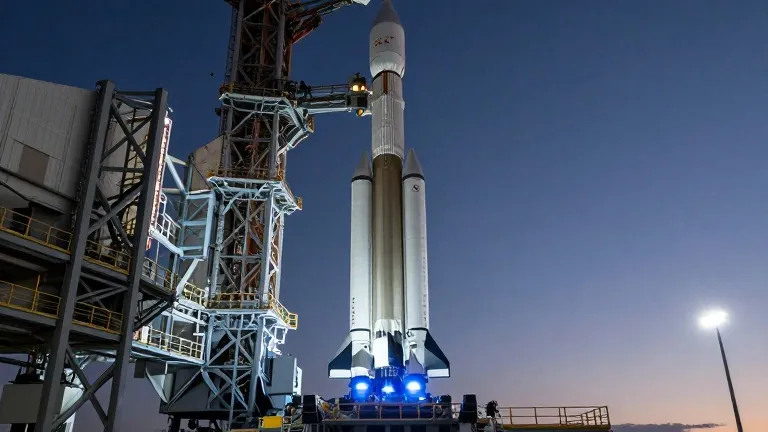
SpaceX restricted the speed capabilities of its Starshield satellite network last week, a move that disabled Ukrainian interceptor drones moving at high velocity. The Ukrainian military stated that the terminals could no longer maintain a connection above certain speed thresholds, rendering the systems ineffective against Russian bomb-carrying drones. This loss of defensive capability allowed Russian forces to target energy infrastructure more effectively, resulting in two reported deaths and at least 17 injuries.
Ukrainian President Volodymyr Zelenskyy characterized the throttling as a direct message from the United States, noting the timing coincided with rising tensions between his administration and President Donald Trump. The Ukrainian military said it received no advance notice of the changes. Initial explanations for the decision varied widely. Elon Musk first stated that SpaceX did not control Starshield and that the US military made the decision. The White House subsequently denied involvement. Later reports indicated that Musk proposed the slowdown to Trump, who accepted it, before final accounts suggested Musk ordered the restrictions independently. Access to the service in Ukraine has since been restored.
The incident has drawn attention to the extent of Ukraine's reliance on US technology for its defense. Experts note that similar access limitations occurred in 2022, when coverage was not extended to support a counterattack in Crimea. The episode has shifted focus to the concentration of power in the space sector. Wendy Whitman Cobb of the School of Advanced Air and Space Studies at Maxwell Air Force Base observed that SpaceX holds an effective monopoly on launch. She noted that while rivals such as United Launch Alliance, Blue Origin, and Rocket Lab exist, none matches SpaceX in frequency, mass, scale, or cost.
SpaceX has deployed a network of more than 10,000 Starlink satellites in low Earth orbit using Falcon 9 rockets. Oğuz Karasu of the Oxford Space Initiative described the monopoly as practical rather than legal, noting that launch accounts for approximately 8 percent of the space industry but is essential for all other operations. Andrew Reddie of the University of California, Berkeley, called the situation close to an antitrust issue, as SpaceX launches support constellations it owns, reducing incentives to launch competing systems.
Whitman Cobb and Karasu reported hearing complaints that Falcon 9 prices for low Earth orbit are rising, and Starlink prices have increased since its 2020 beta launch. They emphasized that satellite connectivity and GPS are critical to daily infrastructure, including fuel pumps, ATMs, and ambulance dispatch. SpaceX is reportedly retiring the Falcon 9 and will not accept new missions starting in 2028. This timeline has left the Space Force seeking alternative launch options for military satellites and has raised questions about NASA's continued access to the Crew Dragon capsule.
Michele Scataglini of the Oxford Space Initiative stated that the market requires more competition to function properly. Reddie identified the central security problem as a non-state actor making decisions that resemble government actions. The February Falcon 9 issue that briefly grounded the rocket and affected the Crew-12 launch further highlighted these operational risks. NASA continues to support Boeing's Starliner program and contracts with Rocket Lab and Blue Origin, but experts warn that reliance on a single firm poses long-term risks for global space access.
Source: The Verge