Musk Counters NASA Panel With Lower Lunar Fuel Estimate
The SpaceX chief argues six to eight tanker flights suffice for the 2028 mission, challenging a panel figure of 22.
By Nicholas Martin ·
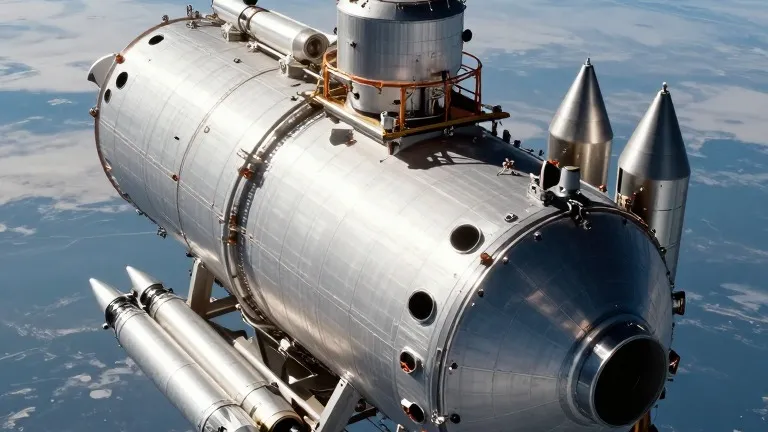
Elon Musk stated on Thursday that six to eight Starship tanker flights are sufficient to fuel the lunar lander for the Artemis IV mission, directly contradicting a recent estimate from a NASA safety advisory panel.
The discrepancy surfaced during a quarterly public meeting of the Aerospace Safety Advisory Panel. Panel member Charlie Precourt, a former NASA astronaut, identified the in-orbit refueling process as a primary risk for the 2028 crewed lunar landing. Precourt cited the most current internal estimate at roughly 22 separate launches required to fill the orbital depot.
After Ars Technica reporter Eric Berger shared Precourt's remarks on X, Musk responded to the figure. He described the 22-launch count as "way too high" and asserted the actual requirement would land in the range of six to eight flights.
The technical challenge stems from Starship's propulsion system. The vehicle consumes nearly all its propellant to reach low Earth orbit, preventing a direct transit to the Moon. SpaceX's proposed solution involves launching a dedicated storage tank, or depot, into orbit first. Subsequent tanker versions of Starship then dock individually to transfer their remaining fuel. Once the depot is saturated, the crewed lunar lander docks to complete its tanks before departing for the Moon.
The divergence in estimates likely reflects differing assumptions about vehicle capability. NASA appears to be calculating based on the current lift capacity of Starship, whereas Musk's lower range assumes a more efficient, upgraded version of the rocket. The number of launches also factors in propellant losses, as the cryogenic fuel and oxygen boil off slowly while in orbit and during the physical transfer process.
Time is a critical variable in this logistics plan. Berger noted that even if SpaceX achieves a launch cadence of two Starships per week by late 2027, filling a depot at the panel's estimated 22 flights would take approximately three months. A lower count of six to eight flights would reduce that window considerably, lowering the risk of mechanical failures or delays before the crewed launch window opens.
Musk has previously disputed high launch counts for this mission. In 2021, he called a government suggestion of 16 launches "extremely unlikely," predicting a maximum of eight tankers would be needed. The final number will depend on the performance of the upgraded V3 Starship, which is designed to handle the refueling operations.
Source: Teslarati