NASA reveals Starship needs 22 launches for lunar landing
A new internal estimate suggests SpaceX's Starship requires far more orbital refueling flights than previously hoped to support a crewed Moon mission.
By Kaito Shevchenko ·
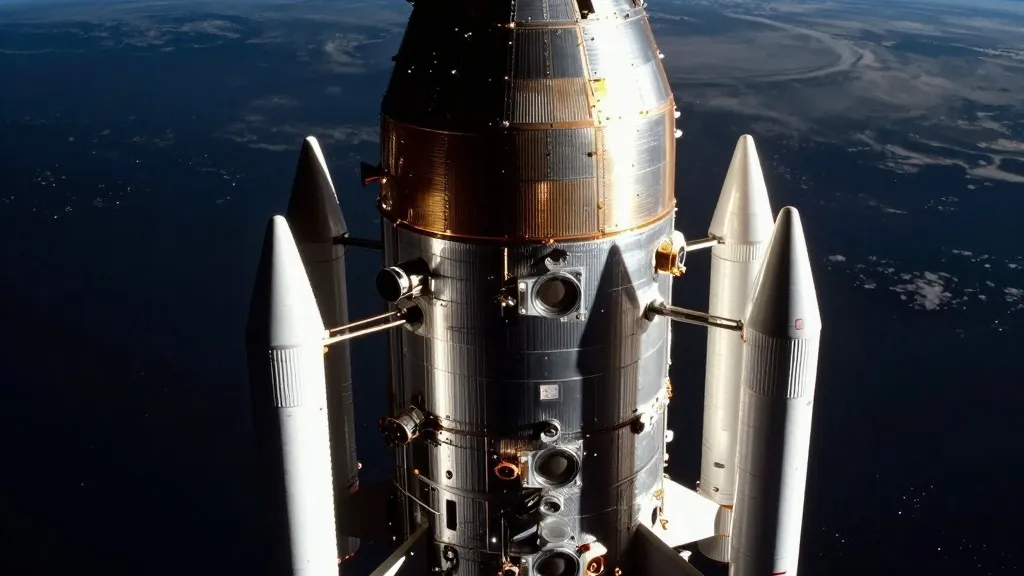
NASA has finally put a specific number to one of the most guarded metrics in the Artemis program. The space agency’s latest internal estimate indicates that 22 launches of SpaceX’s Starship rocket are required to successfully fuel a lunar lander for a trip to the Moon and back. This figure marks a significant shift in the agency’s public stance, moving away from vague approximations toward a concrete, if concerning, operational target for the decade’s most ambitious spaceflight goals.
The number 22 represents the total count of Starship vehicles needed to establish a propellant depot in low-Earth orbit. This depot must be fully loaded with liquid oxygen and methane before it can separate, travel to the Moon, land a crew, and return to lunar orbit. The estimate implies that one Starship will serve as the final depot vessel, while the other 21 will act as tankers, ferrying fuel to that central station. This level of logistical complexity highlights the immense engineering challenges still facing the Artemis program.
For years, NASA officials have been hesitant to share this specific count, often describing it with the discretion of those guarding nuclear codes. In 2023, Lisa Watson-Morgan, then-director of the Human Landing System, told Ars Technica that while the agency had a general idea, she was reluctant to provide an exact figure. She later described the requirement as being in the “high single digits to the low double digits,” a range that suggested around a dozen launches. Other officials have even cited the “high teens,” indicating that the target has consistently moved higher over time.
The recent increase to 22 launches has raised alarms among some NASA officials. There is growing concern that SpaceX may not be able to improve the lift capacity of the Starship vehicle quickly enough to reduce the number of tanker flights. If the lift capacity does not increase dramatically, the sheer volume of launches required could delay the timeline for returning humans to the Moon within this decade. The hope was always that better performance would lower the launch count, but current data suggests that progress may be slower than anticipated.
The new estimate was revealed during the quarterly meeting of the NASA Aerospace Safety Advisory Panel held on Thursday. Panel member Charlie Precourt, a former NASA astronaut, discussed the risks associated with the Artemis program and the challenges of landing humans on the lunar surface. His remarks provided a rare window into the internal deliberations regarding the logistical feasibility of the Starship-based lunar lander. The discussion underscored the tension between optimistic timelines and the hard realities of orbital mechanics and rocketry.
This development adds a new layer of complexity to the Artemis architecture. The program relies heavily on the Starship vehicle to transport both the crewed lander and the necessary propellant to the Moon. The requirement for 22 launches means that SpaceX must conduct a massive campaign of orbital refueling operations. Each tanker mission must be executed with precision, and any delays or failures in this sequence could ripple through the entire program, pushing back key milestones.
The shift from a lower estimate to 22 launches also reflects the evolving understanding of the mission’s requirements. As the program progresses, engineers have gained a clearer picture of the propellant volumes needed for the lunar transfer and return journeys. This more accurate modeling has replaced earlier, more optimistic guesses with a more realistic, if less favorable, number. The agency is now working with this new baseline to plan its operations and manage expectations.
Looking ahead, the focus will turn to how quickly SpaceX can achieve the necessary launch cadence and reliability. The 22-launch requirement is not just a number; it is a logistical hurdle that must be cleared before astronauts can set foot on the lunar surface. NASA and SpaceX will need to coordinate closely to ensure that the orbital depot is built efficiently and safely. The coming months will be critical in determining whether this new estimate can be met within the planned timeframe.
The Artemis program remains a central pillar of NASA’s efforts to return to the Moon and establish a sustainable presence there. While the new estimate introduces challenges, it also provides clarity. By acknowledging the 22-launch requirement, NASA can better allocate resources and manage risks. The goal remains unchanged: to land humans on the Moon and use that experience as a stepping stone for future missions to Mars. The path to that goal is now clearer, if not necessarily easier, than it was a few months ago.
Source: Ars Technica · original report published