Supreme Court leaves Texas deportation rule intact
Justices denied a bid to pause the litigation, leaving immigration judges barred from delaying removal proceedings for certain applicants.
By Maya Sokolov ·
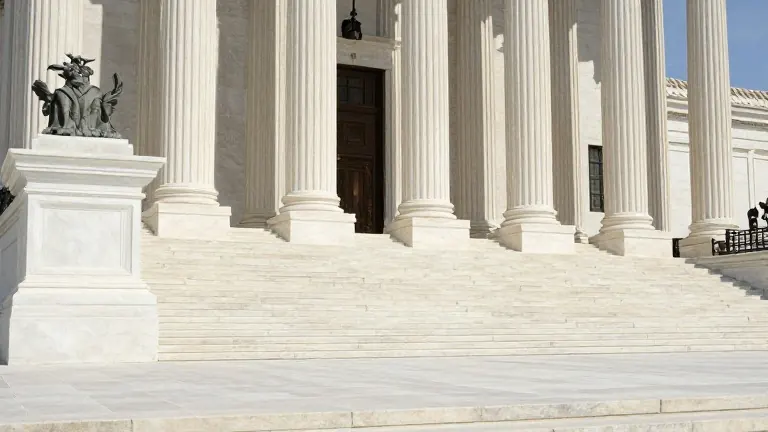
The U.S. Supreme Court declined on Tuesday to intervene in a Texas-led lawsuit, leaving immigration judges prohibited from pausing deportation proceedings. This decision affects immigrants who qualify for legal status through marriage to a U.S. citizen or specific visas for crime victims.
The legal battle centers on a federal rule revived by the Biden administration in 2024. That rule permitted judges to postpone removal cases for individuals with pending applications for legal status. Texas Attorney General Ken Paxton challenged the policy in a 43-page complaint filed on June 22 in the Northern District of Texas. Paxton argued the rule functioned as indefinite amnesty for aliens illegally present in the country.
District Judge Reed O’Connor ruled in favor of Texas the same day the suit was filed. The rapid decision followed a response from the Department of Justice under the Trump administration, which stated it agreed with the position of Paxton’s office. While federal lawsuits typically take months or years to resolve, this case concluded at the district level immediately.
Four entities subsequently filed a lawsuit to challenge the district court’s ruling. The plaintiffs included Baltimore, New Haven, Connecticut, and Columbus, Ohio, along with Centro Legal de la Raza, an Oakland, California, based nonprofit. The group argued that Congress approved the rule, thereby granting judges the authority to halt proceedings for eligible immigrants.
The cities and legal nonprofit warned that undocumented crime victims might cease cooperating with local law enforcement if they face immediate deportation risk. They contended that these individuals qualify for specific visas that allow them to remain in the country during criminal prosecutions. The cities also cited potential losses in tax revenue if their residents are removed.
The Supreme Court issued a one-sentence ruling on Tuesday denying the plaintiffs' request to protect the procedures established during the Biden administration. The case may now return to a lower court to determine if the cities can intervene. Alternatively, the cities can petition the Supreme Court for a full hearing on the matter.
Source: The Texas Tribune