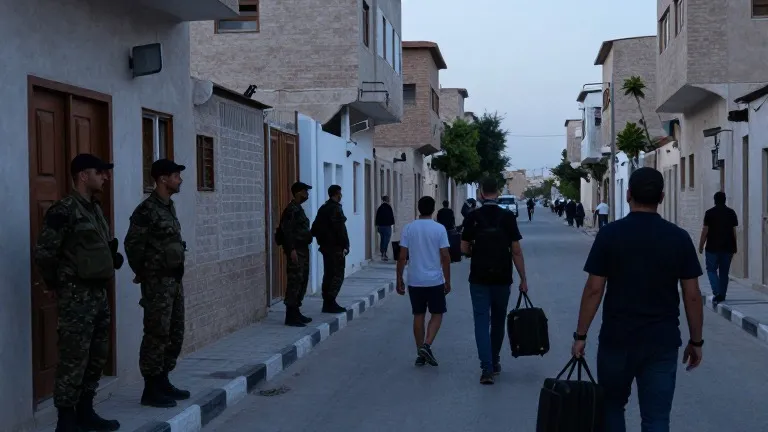
Taiz Water Crisis Deepens Under Houthi Siege
Aid agencies report that drinking water access in Yemen's third-largest city has collapsed as rebel forces tighten their grip on the region.
By Kaito Shevchenko ·
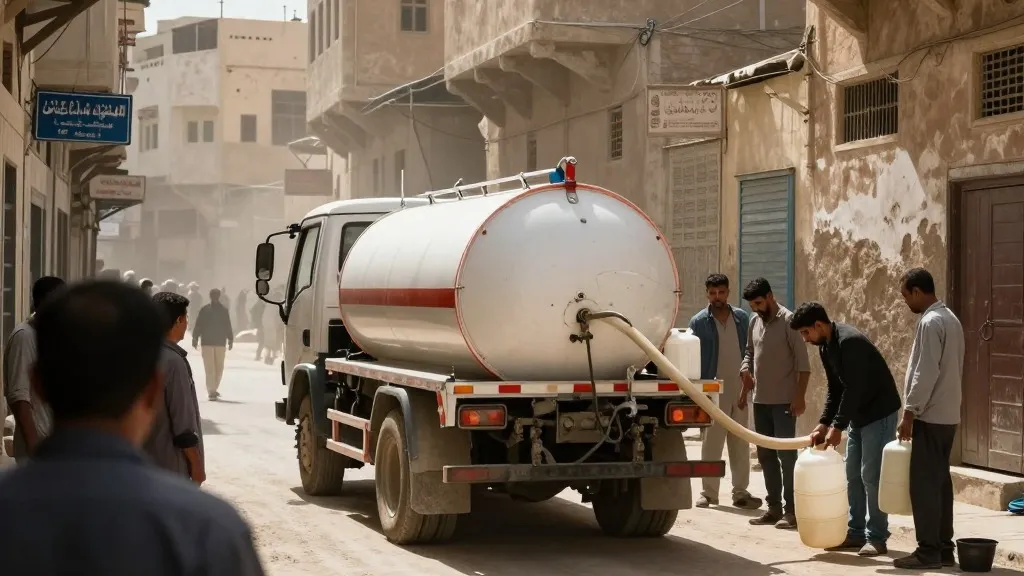
Yemen's Taiz is running out of water as a Houthi siege strangles the city's supply lines.
Aid groups describe the situation as a crisis that has worsened sharply in recent weeks. The conflict between Iran-backed rebels and government forces has escalated, leaving more than one million residents with barely enough water to meet basic needs. Access to local wells is now restricted, and desalination plants are struggling due to a lack of fuel. Water trucks, which previously provided a reliable backup, are largely blocked from entering the city.
Households are stretching every drop to survive. Hadil al-Shahid, a resident with two young children, noted that her family once used about ten liters of bottled water daily. They now make that same amount last for four days. "We stopped drinking coffee and tea, which we used to drink daily," she said. Prices for bottled water have surged by up to 75% in just a few weeks, forcing some families to buy on credit to keep their taps flowing.
The impact extends far beyond hydration. Grocery shortages have driven up food prices, while scarce fuel hampers hospital operations and sanitation services. Amnesty International has urged the Houthis to open roads immediately, warning that Taiz is nearing the brink of a severe humanitarian disaster. The water utility and desalination plants are operating well below capacity as fuel reserves dwindle.
Context suggests this is part of a broader strategic push. The Houthis captured the port city of Mokha last month, a move that secures control over Red Sea shipping. Since then, they have advanced on Taiz, cutting off nearby wells and outside deliveries. Truckers who still make the dangerous trip have tripled their rates. The province has also absorbed roughly 124,000 displaced people since August, according to United Nations migration experts. Jens Laerke, a UN spokesperson, noted that many displaced families live in makeshift shelters and survive on one meal a day.
Economic pressures are compounding the health risks. Cooking gas prices have more than quadrupled, leading some families to burn wood or charcoal. Fuel shortages have also shut down waste collection, increasing the likelihood of disease. Flour and rice now cost about 50% more than they did in the summer. Hani Bafaqih of the aid group CARE highlighted the rising cost of essentials, while Laerke warned that the shortages feed into each other, making cholera outbreaks more likely.
Outlook remains tense as the government holds the city center but faces stiff resistance in the surrounding hills. Analysts say controlling Taiz is key for the Houthis if they want to push south toward Aden and Lahj. Ahmed Nagi of the International Crisis Group predicted that any attempt to seize parts of the city would lead to a prolonged and costly battle. Three Houthi officials claimed the group controls about 80% of the surrounding countryside and several neighborhoods inside the city, a claim the Associated Press could not verify. Civilians remain in danger, with recent missile strikes killing two teenage girls in a residential area.
Source: NPR