San Francisco Startup Pays Women $40 for Menstrual Blood to Build a Stem Cell Bank
Muse Bio is collecting menstrual fluid from about 60 donors in hopes of building a biobank of stem cells, though some leading researchers doubt the cells offer much medical benefit.
By Mei Ling ·
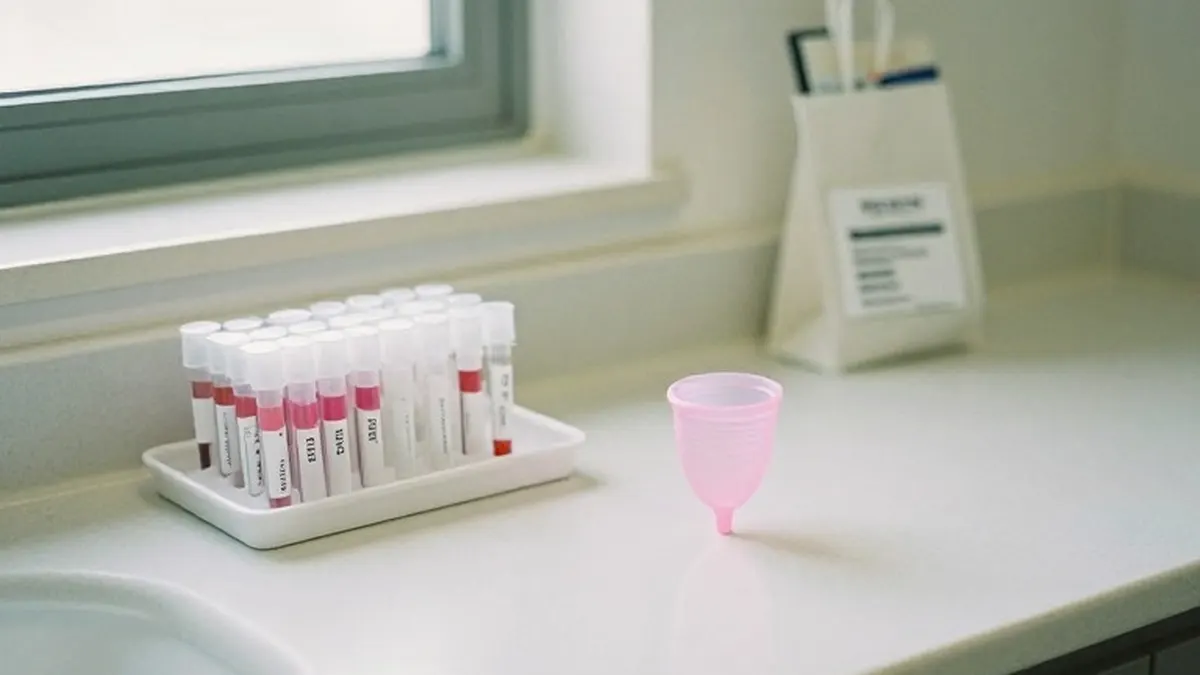
Two days after her period begins, Rosetta Wang drives from Berkeley to Frontier Tower, a coworking space in downtown San Francisco. The 26-year-old rides the elevator to the eighth floor, goes to the restroom, and empties her menstrual cup into a test tube. The whole thing takes about 15 minutes. In return she receives a bag of chocolates, face masks, hand cream and stickers, plus a $40 Visa card.
Wang, CEO of the cacao-free chocolate startup Laurelate, is one of roughly 60 regular donors to Muse Bio, a company about a year old. "People have an ick about menstrual blood," she said, but she finds the process easy. She spent her payment on parking.
Muse is betting on stem cells, the self-renewing cells that biotech has poured billions into for uses ranging from wound healing to wrinkle reduction. Menstrual fluid contains stem cells shed from the uterine lining, and the company hopes it can become an inexpensive source. Its plan is to build a biobank, starting with skin care products and later moving to fertility and regenerative therapies. Cofounder Juliette Humer, 30, called menstrual fluid "a vitally overlooked source of biological value."
Stem cells were first found in menstrual fluid in 2007, and researchers estimate the fluid holds a volume of stem cells similar to that of bone marrow. Unlike bone marrow, it can be collected without needles or surgery. The work was sidelined for years by stigma and collection problems, but that is changing. MIT announced a menstruation science initiative last year, and menstrual-derived stem cells are being used in early clinical trials for fibrosis and fertility.
Muse's donation program has run for about six months and was cleared last August by an independent Institutional Review Board. Donors must be 18 to 45, not pregnant or breastfeeding, and free of blood infections, endometriosis and polycystic ovary syndrome. They should also not have recently used steroids or antibiotics. Participants include startup founders, a bartender and a chiropractor.
Humer, who studied microbiology at Hampshire College, came to the field through her own health. At 23, a sneeze left her with back pain that kept her in bed for a year, and doctors told her the only solution was aggressive spine surgery every five years. Stem cell clinics quoted $250,000. She found research on menstrual-derived stem cells instead, avoided surgery through physical therapy, and began building Muse last year with cofounder Tommy Kronmark, a biomedical engineer at Roche. Muse has raised $1.1 million, including investment from Tim Draper and his son Adam Draper after Humer pitched on the reality show "Meet the Drapers." The final airs March 24.
Scientists are divided. Vinod Reddy Lekkala, a UCSF stem cell researcher, said the cells are a good source but he does not see "a major advantage" over other sources, noting that menstrual fluid also contains blood, mucus, tissue and microbes that require extra processing. Dr. Deepak Srivastava, president of the Gladstone Institutes, questioned whether these multipotent cells provide any benefit, saying decades of research suggest they "were not doing anything beneficial." Olga Sazonova of Xella Health countered that traditional collection is far more invasive and that stigma has kept menstrual science understudied.
Muse's first product is a skin serum made from growth factors produced by cultured menstrual stem cells, drawn from women the company calls "superdonors." The company hopes to release it this year and has agreements with 700 medspas and surgical offices. As a cosmetic, it does not need FDA approval or efficacy trials. "Our hearts are set on therapeutics," Humer said, but the serum would drive revenue to fund research. Muse plans to seek $10 million more.
Donors have their own reasons for taking part. Lily Chao, 33, said she would not keep donating without the payment. Brenda Eap, 31, a longevity policy advocate who has donated twice despite a three-hour round trip, said she would happily try the serum because "they are my own cells." Wang says the money is not what draws her. She wants to contribute to science.
Source: The San Francisco Standard
More Tech · San Francisco news · Report a business · Got a Story?