Czech Leaders Advance Media Funding Shift
Lawmakers voted to send a bill to committee that replaces the household broadcaster fee with state budget allocations, a move critics say risks independence.
By Maya Sokolov ·
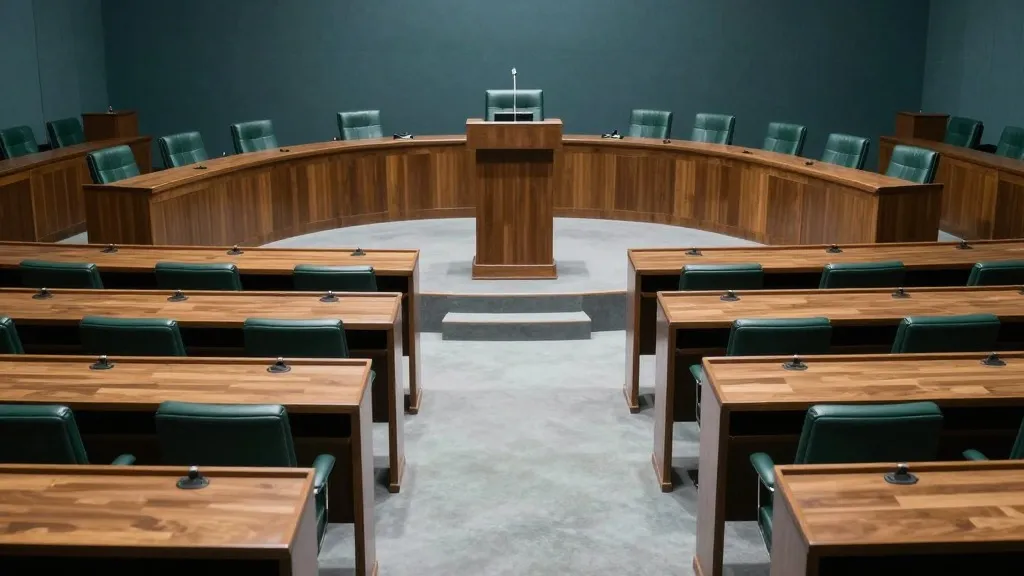
Prime Minister Andrej Babis and his governing coalition in the Czech Republic have officially moved forward with a major restructuring of public media finances. In a legislative session that extended into the early hours of Saturday, October 24, coalition members voted to refer the controversial bill to committees for deeper review. This action signals the government's intent to proceed with the changes despite significant pushback from opposition parties and industry employees who fear the reforms could compromise editorial autonomy.
The core of the proposal involves eliminating the mandatory household broadcasting fee, which currently stands at 205 crowns or approximately $9.45 per month. Under the new framework, funding for national broadcasters would be sourced directly from the state budget rather than from individual households. The legislation also mandates a roughly 15 percent reduction in the overall funding levels for Czech Television and Czech Radio. Following this initial cut, nominal funding amounts are expected to remain static for several years, limiting the capacity for growth or expansion in the public sector.
Babis, a billionaire populist who took office in December of last year, has long promised to end the household fee. He frames the shift as a fulfillment of a campaign pledge and a correction to what he views as an unfair burden on lower-income families. In a social media post published late on Friday, the Prime Minister dismissed concerns about government overreach. He stated that there is no war for independent media and no preparation for nationalisation, arguing instead that the new model would encourage broadcasters to operate with greater efficiency.
The political context of the change is complicated by the coalition's composition, which includes the far-right SPD party. This alliance has frequently criticized both public and private media outlets for their coverage of government policies, often accusing them of bias. Opponents of the bill have drawn parallels between the Czech proposal and media reforms implemented in neighboring Hungary under former Prime Minister Viktor Orban. They argue that shifting funding to the state budget creates a direct leverage point for the government to influence content and staffing decisions.
Public media occupies a central role in Czech society, with Czech Television consistently ranking as the most-watched broadcaster across multiple demographic groups. The outlets also maintain high levels of public trust. Given this prominence, employees at the broadcasters have already taken action to signal their discontent. A strike was held in June, with workers arguing that budgetary dependence on the state leaves them vulnerable to political pressure.
The situation remains volatile as further demonstrations are organized. A civic group has scheduled a public protest for Sunday, while journalists and other staff members at the public broadcasters have announced a new strike for November 3. As the bill moves to committee, the coming weeks will likely see increased tension between the government's drive for fiscal reform and the media sector's efforts to preserve its institutional independence.
The outcome of the committee phase will determine the final shape of the legislation. While the government maintains that the changes are necessary for financial sustainability and fairness, the opposition and media workers continue to rally around the issue. The next few days are expected to be critical in determining whether the coalition can secure the support needed to pass the overhaul or if the pressure from protests will force a reconsideration of the terms.
Source: Al Jazeera
More Politics · World news · Report a business · Got a Story?