France Mobilizes Massive Police Force as National Unrest Enters Second Phase
A heavy security presence marks the start of a new round of protests in France, driven by school conditions and economic pressures, just one week after violent clashes disrupted major cities.
By Kaito Shevchenko ·
Tensions escalated across France on Saturday as the nation entered a second phase of widespread demonstrations, prompting a significant increase in law enforcement deployment. This new wave of activism follows a turbulent week that saw the country endure its most severe riots in years, driven by deep-seated frustrations over the deteriorating state of the education system and a sharp rise in the cost of living. The atmosphere remains charged as citizens take to the streets once again to demand systemic change from the government.
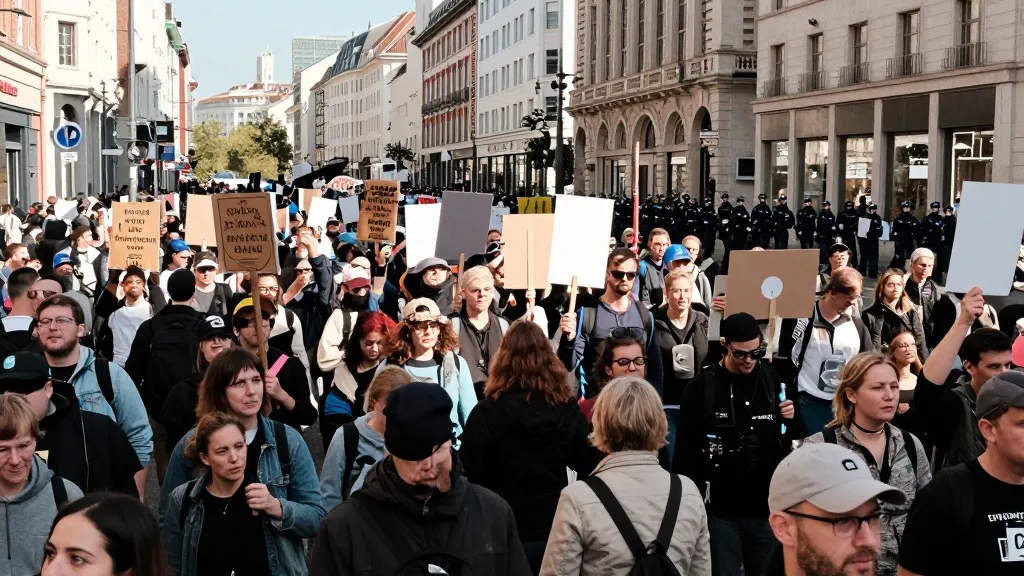
In the capital, thousands of demonstrators gathered at Porte d'Italie to begin a march along the Boulevards des Marechaux toward Porte de Vincennes. Local authorities designated this southeastern route as the only permitted path, a decision that came after they rejected an earlier, negotiated itinerary that would have cut through the city center between Place de la Bastille and Place de la Nation. The restriction further limited participation by banning protests organized by groups outside of traditional unions, a move that complicated the logistics for many attendees.
The sudden shift in the official route frustrated many participants who felt their efforts were being undermined. Emma, a protester who also works as a podcaster, described the change as a deliberate strategy by the government to drain the momentum of the movement and discourage further involvement. Monica, a retired teacher, expressed a similar sentiment, noting that the decision made the movement appear less visible to the public. Both women chose not to share their last names with the press.
The crowd on the march was diverse, comprising students, educators, ecologists, nurses, and union officials. The mood was a mix of determination and defiance, with groups dancing and chanting creative slogans to keep spirits high. Some marchers called directly for President Emmanuel Macron to step down, while others focused on economic inequality and political ideology. One group shouted that the presence of too many billionaires was signaling the preparation for a revolution, and another group declared that they were all anti-fascists.
Precautions in central Paris were extensive as businesses braced for the turnout. Many shop owners shut their doors and covered windows with protective panels, while some retailers hired private security firms to monitor their premises. The Parisian transit system also adjusted to the situation, with at least 24 metro stations closed at the request of the police prefecture. Major cultural institutions, including the Louvre and the Musee d'Orsay, closed their doors for the day, and Art Basel Paris canceled its weekend programming to avoid the crowds.
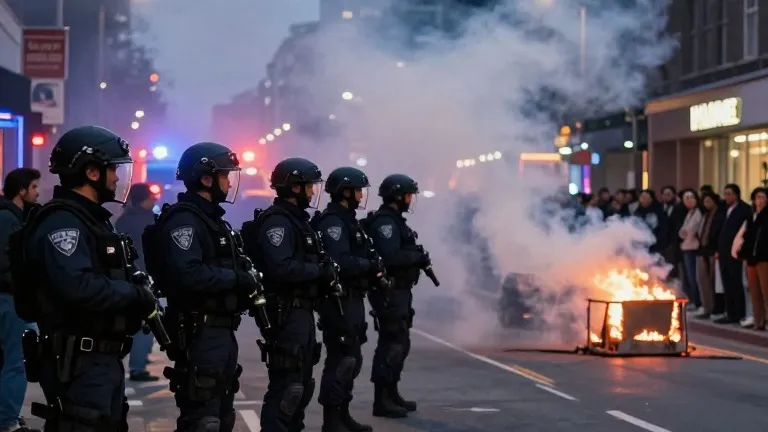
Authorities reported that more than 70,000 police officers and gendarmes were deployed nationwide for the event. This large-scale mobilization was aimed squarely at preventing a repeat of the disturbances seen on October 17. On that previous day, largely peaceful protests turned chaotic with widespread looting, vandalism, and clashes. Official figures indicated that thousands of businesses were damaged or ransacked, and more than 2,000 people were taken into custody during the incident.
Interior Minister Laurent Nunez stated that the current deployment includes twenty percent more officers than the previous weekend. The ministry noted that the elite RAID unit was supporting broader police operations rather than directly managing the crowds, a tactical shift designed to provide rapid response capabilities where needed. By early Saturday afternoon, police reported that the overall situation remained calm, though they had arrested at least 135 people nationwide and seized a variety of weapons. Protests in downtown areas of Montpellier, Rouen, and Nice were prohibited, while a union march in Marseille was allowed to proceed under strict conditions. In Lyon, police used tear gas to disperse a group of about 150 demonstrators.
The current unrest traces its origins to mid-September, when high school students began blockading their schools to protest dilapidated buildings, a shortage of teachers, and what they view as an unfair university admission system. On Friday, President Macron met with student representatives for the first time since the demonstrations began. During the meeting, he promised to increase the number of teachers and to conduct a deep overhaul of the Parcoursup admission system. Student leaders, however, stated that they would continue mobilizing until the government presents concrete actions beyond these initial promises. More than half a million people had taken to the streets during the previous demonstration on October 17.
The timing of the turmoil adds a layer of political complexity, as it occurs about six months before a pivotal presidential election. President Macron is barred from seeking a third consecutive term and is scheduled to leave office in 2027. Marine Le Pen, who has long campaigned on a platform of restoring law and order, currently leads recent polls by a wide margin. The political stakes were highlighted in Orléans, where thousands shouted anti-fascist slogans as her National Rally held a party congress to mark the start of its campaign. Authorities expected between 20,000 and 30,000 people to join a counter-demonstration against the event.
Source: Al Jazeera