Isrealis vote to determine next prime minister in split parliament
Benjamin Netanyahu faces former military chief Gadi Eisenkot in a contest where Arab-led parties may decide the outcome.
By Nicholas Martin ·
The central conflict of Tuesday's election in Israel is the fight to remove Prime Minister Benjamin Netanyahu from power after three years of continuous war. Opinion polls indicate a tight race between Netanyahu and his main rival, former military chief Gadi Eisenkot. Because no single party has ever won an outright majority in the fragmented Israeli parliament, the outcome may not be known immediately. If neither side secures enough seats, nonaligned Arab parties could become kingmakers, potentially triggering weeks of coalition negotiations before a new leader is declared.
The path to this vote began with the Hamas attack on October 7, 2023, which sparked the war in Gaza and related regional conflicts. This is Israel's first national vote since that event. In the months leading up to the election, tensions with Iran intensified. Netanyahu recently appeared in a video standing beside a missile-defense battery, warning Tehran that it would face a devastating blow if it attacked. The campaign has also been defined by a deep internal divide over the character of the state, pitting supporters of religious and ultranationalist influence against those favoring liberal and secular values.
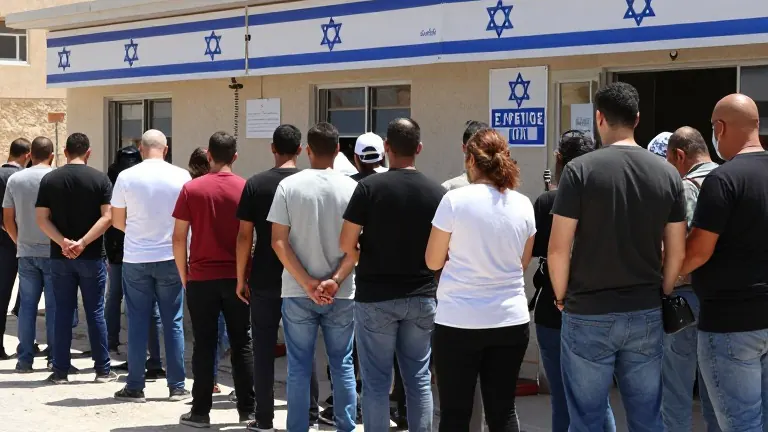
In Tel Aviv, families of victims killed on October 7 or former hostages observed a moment of silence before polling stations opened. Yona Adam, whose daughter Mapal Adam was killed in the attack, urged voters to remember all those whose voices are no more. In Kiryat Shmona, a Netanyahu stronghold near the Lebanon border, tensions were visible as one man kicked and tore down a poster of Eisenkot. The election is also seen as a referendum on Netanyahu's leadership, with critics arguing he is beset by a corruption trial and has undermined the judiciary. His supporters view him as a steady hand who has protected Israel's Jewish identity while checking an interventionist court system.
Eisenkot is viewed by his backers as a capable leader with strong security credentials. His son and two nephews were killed in Gaza, a personal loss his supporters believe gives him a deep understanding of the country's current pain. Parties likely to support Eisenkot have pledged to improve Israel's international standing, conscript ultra-Orthodox men into the military, and bolster the independence of the judiciary. Israel has faced increased isolation from traditional allies in Europe and the United States in recent months due to its conduct in Gaza and the West Bank.
The next step depends on the final seat count. If the race remains split, coalition talks will begin immediately after the results are tallied. The Arab-led parties, which are pushing for high turnout, hold the potential to break any deadlock. A new government must be formed before a leader is officially declared, a process that could take several weeks if negotiations are protracted.
Source: KSAT-TV