Tesla Extends Optimus Humanoid Robot Delivery Timeline to Late 2027
Elon Musk attributes the delay to persistent challenges in the robot's hand mechanics, durability, and AI generalization, despite claims that competitors are lagging behind.
By Nicholas Martin ·
Tesla has officially pushed back the start of external deliveries for its Optimus humanoid robot to late 2027. During the company’s Q3 2026 earnings call, CEO Elon Musk indicated that while early production has begun, significant hurdles remain in the robot’s hands, overall durability, and artificial intelligence capabilities. This update signals a continued struggle for Tesla to transition from prototype development to a scalable commercial product, mirroring the broader challenges facing the humanoid robotics industry.
The primary bottleneck identified by Tesla engineers is the mechanical design of the robot’s hands. Musk explained that the fingers must be soft enough to handle delicate objects yet durable enough to withstand constant industrial wear, a balance that is difficult to achieve without the self-healing properties of human skin. Alongside the hands, custom gears have raised reliability concerns. These hardware issues, combined with the need for electromechanical refinement, have necessitated a longer development window than previously anticipated.
On the software front, Tesla faces a distinct data challenge. Unlike its vehicle fleet, which generates vast amounts of driving data for Full Self-Driving (FSD), Tesla does not yet have a large fleet of robots collecting real-world task data. To address this, the company plans to deploy 10,000 to 20,000 units in an "Optimus Academy" where they will practice tasks to train the AI. Additionally, Tesla intends to integrate its AI5 chip into Optimus around April 2027 to enhance processing capabilities, aiming to solve current architectural limitations in the AI stack.
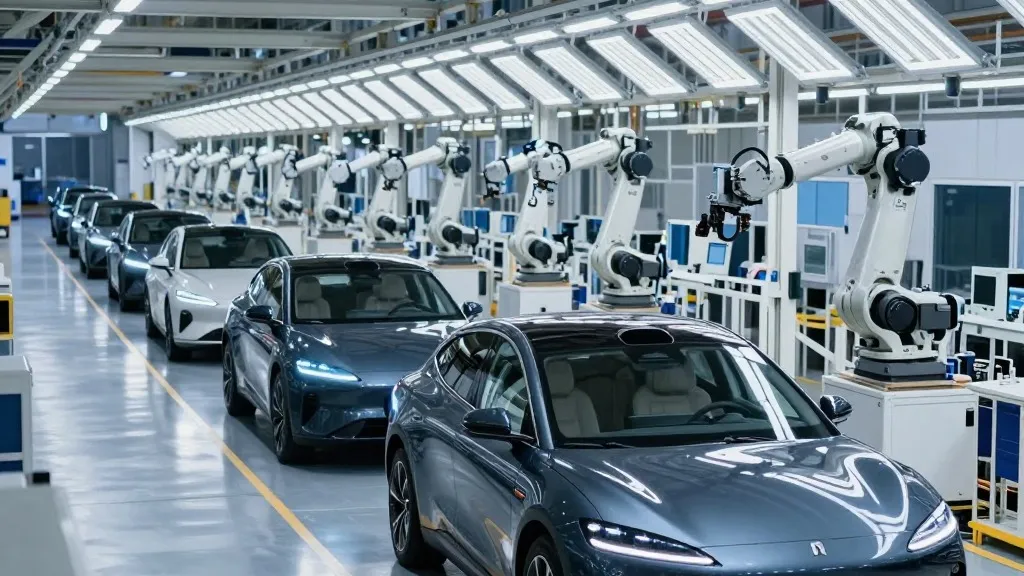
Production infrastructure is already in place, with early manufacturing starting on Tesla’s high-volume line in Fremont, a facility previously dedicated to Model S and X production. While most of the assembly line designed for a capacity of one million robots annually is installed, Musk noted that reaching a rate of 20,000 units per week will take at least a year. The company describes the units currently leaving the line as the first "production-quality" bots, implying that previous iterations were not ready for external commercial use.
The timeline for Optimus has shifted multiple times since the project’s inception. In 2024, Musk projected internal use in 2025 and high-volume external production in 2026. By January 2025, he estimated 10,000 units would be built that year, with several thousand performing useful work by year-end, a goal he later acknowledged was not met. The current target of late 2027 for external deliveries represents the latest adjustment, focusing first on industrial applications that are dangerous, repetitive, or require continuous operation.
Musk maintains a confident stance on Tesla’s market position, stating on the earnings call that he is unaware of any competitor "even close" to Tesla in general-purpose humanoid robotics. However, industry observers note that rivals are making parallel progress. XPeng, for instance, activated an automated production line for its IRON robot in September, with plans for mass production by the end of 2026 and deliveries in the first half of 2027, a timeline comparable to Tesla’s. XPeng’s robot features 21 degrees of freedom in each hand and runs on in-house Turing chips.
Hyundai’s Boston Dynamics is another key competitor, having begun production of its electric Atlas robot in January 2026. The company reports that all 2026 deployments are committed, including partnerships with Google DeepMind for AI integration. Boston Dynamics has also opened a training center in Georgia where Atlas is learning to sequence car parts. Notably, Boston Dynamics hired Milan Kovac, Tesla’s former head of Optimus, in January, suggesting a competitive talent war. Boston Dynamics has adopted a pragmatic approach to hands, prioritizing sturdy grippers for industrial use over human-like dexterity.
The delay raises questions about the feasibility of Tesla’s claims regarding its lead in the sector. While Tesla may have the highest volume of robots built, the core challenge for all players is making them useful and reliable in unscripted environments. Musk promised a video within one to two months demonstrating Optimus performing unprogrammed tasks, a move intended to counter criticisms that many humanoid demos rely on scripted routines. The success of this demonstration will be critical in validating the new late-2027 timeline for investors and customers.
Source: Electrek · original report published