Bill Wittliff’s refusal to move to Hollywood reshaped Texas film history
A new documentary premiering Sunday at the Austin Film Festival examines how the screenwriter forced Hollywood studios to travel to Austin instead of the other way around.
By Maya Sokolov ·
Bill Wittliff received consistent advice from industry executives in 1979 after his debut screenplay for The Black Stallion gained attention. The standard recommendation was to relocate to the West Coast to advance his career. Wittliff rejected that path, a decision his son Reid describes in a new documentary as the defining principle of his professional life. If the work could not be done from Austin, Wittliff argued, it was not worth doing at all.
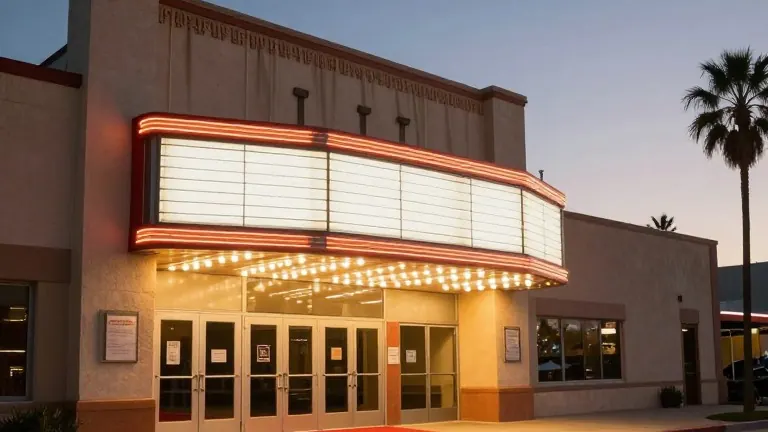
The late screenwriter’s commitment to his home base is the central theme of A Man of Vision: The Bill Wittliff Story. The film premieres Sunday at the State Theatre during the 33rd Austin Film Festival. Wittliff’s body of work includes the Emmy-nominated script for the 1989 television adaptation of Lonesome Dove. He also wrote roles for Willie Nelson in three films and directed two of them. Literary critics frequently compare his writing style to authors like Cormac McCarthy and J. Frank Dobie.
Marise McDermott, executive director of the Wittliff Collections in San Marcos, notes that Wittliff’s success without relocation helped establish the Texas film industry. She states that his refusal to leave the state paved the way for future growth. Film industry leaders traveled to Wittliff’s office on Baylor Street in Austin for years, reversing the traditional flow of talent from the coast to the interior.
Elizabeth Mims, an Austin native, directed the documentary. Mims grew up attending film screenings with her father, Steve Mims, who also shot the interviews for this project. Mims began her career at the Austin Film Festival, where she now serves as an executive producer for the On Story series. The festival named an annual screenwriting award after Wittliff in 1995, creating a strong institutional link between the two.
Mims did not meet Wittliff before his death in 2019, but she worked closely with Barbara Morgan, a festival co-founder and Wittliff’s mentor. The project evolved from an initial idea for a docuseries about the artists in the Wittliff Collections into a feature-length film. Mims focused heavily on Wittliff’s inseparable bond with Texas and his professional relationships.
The documentary features Sally Wittliff, Bill’s wife, as a key creative partner. It also includes interviews with Tommy Lee Jones, who recalls stories from the Lonesome Dove set. William Broyles Jr., a friend of Wittliff, explains that while others were free to leave Texas, Wittliff remained content in his home environment. This attitude allowed him to control his professional terms without geographic compromise.
Mims describes the production process as a personal exploration of Wittliff’s work ethic. She viewed his legacy as a product of consistent, hard labor rather than just talent. The film explores his spiritual beliefs and his view of creativity as a daily discipline. Mims felt a strong connection to Wittliff’s presence during production, interpreting small events as signs of his continued influence on the project.
Source: KUT
More Business · Business Complaints · Report a business · Got a Story?