France's Streets Fill as Citizens Demand Better Schools and Fairer Policing
A massive nationwide march highlights growing frustration with government response to student strikes and rising cost of living.
By Kaito Shevchenko ·
For ordinary French families, the weekend brought a stark reminder of how deeply social tensions have dug into daily life. As hundreds of thousands took to the streets in cities across the nation, the focus shifted from abstract political debates to tangible issues like crumbling school infrastructure and the high cost of living. The movement, which began with students complaining about missing chairs and leaking roofs, has now expanded to include parents and workers who feel their demands are being ignored by the state.
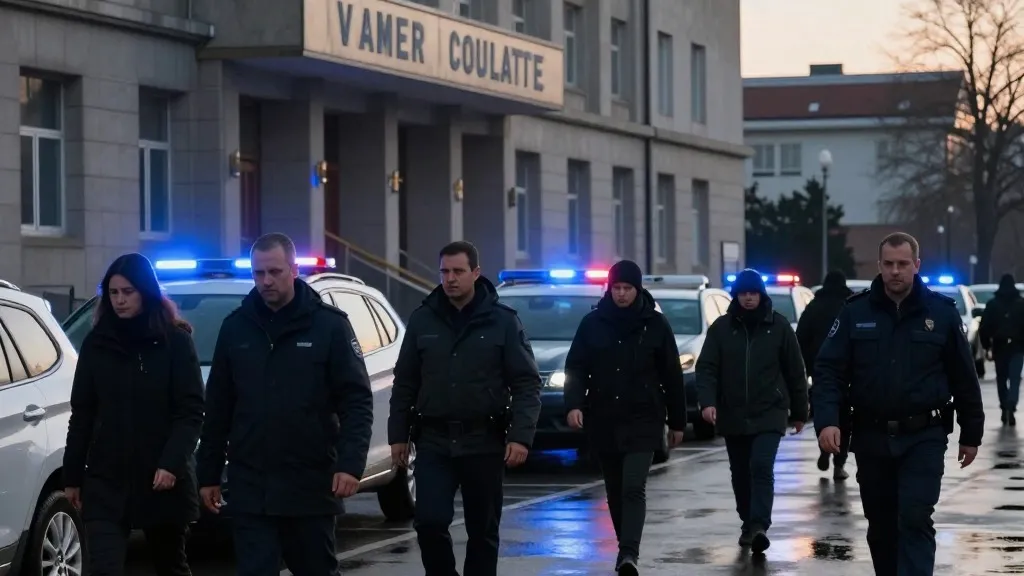
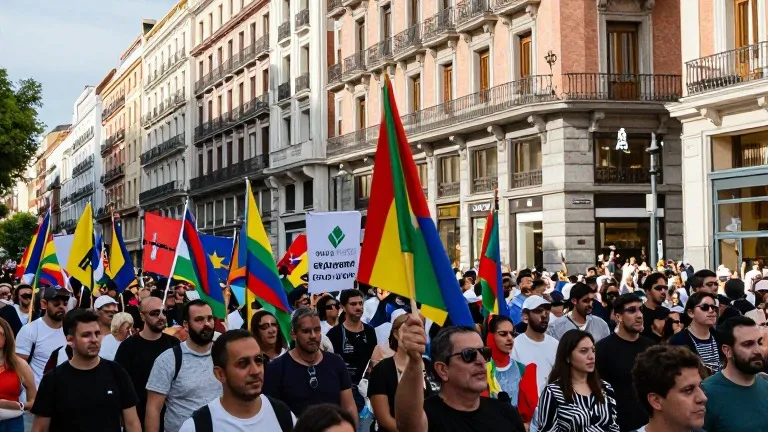
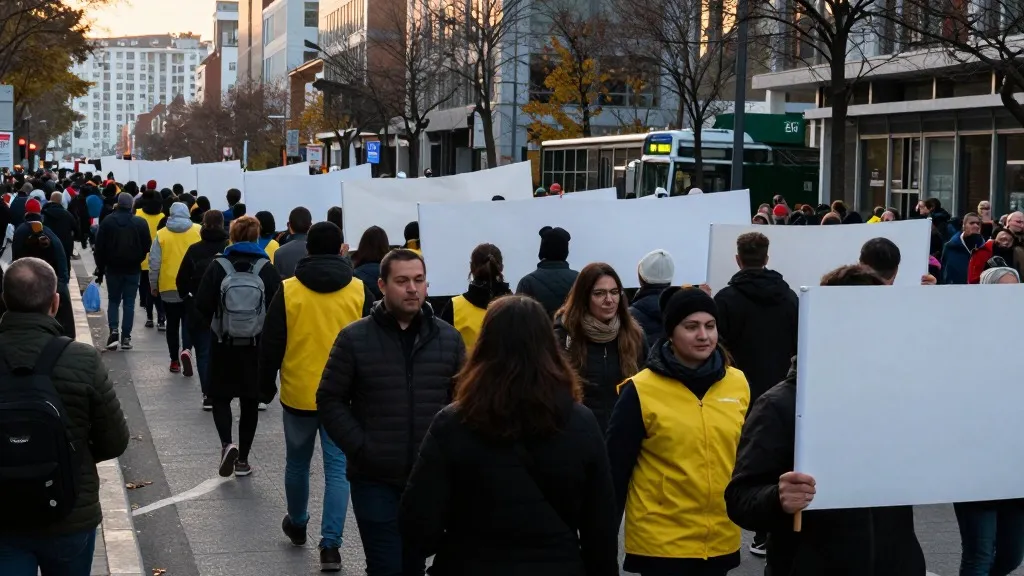
The scale of the mobilization was significant, with government officials estimating that at least 400,000 people marched nationwide. Trade unions, however, claimed the numbers were double that figure. In Paris alone, at least 110,000 demonstrators moved along the eastern edge of the capital. To manage the crowds, authorities deployed more than 70,000 police officers. Many local businesses boarded up their windows, and several major museums closed their doors to the public to ensure safety.
The atmosphere in the capital remained largely relaxed for most of the day, with brass bands playing music and families with young children participating in the march. Banners with slogans such as "Oppression breeds rebellion" and "The right to protest" were visible throughout the crowd. However, tensions escalated near the end of the route at Porte de Vincennes. Groups of masked individuals, distinct from the main peaceful march, threw stones and glass bottles at police. Officers responded with teargas, water cannon, and stun grenades, while a trash bin was set on fire.
Similar clashes occurred in other major cities, including Lyon, Lille, Montpellier, Nantes, and Toulouse, where teargas was used to keep protesters away from city centers. In Marseille, bin fires were lit during confrontations. The government had been particularly cautious after the previous Saturday, which saw one of the most violent days of unrest in years, resulting in hundreds of shops being looted and at least 2,700 arrests.
The protests have placed President Emmanuel Macron under intense scrutiny during the final months of his term. Critics are targeting his administration for banning non-union demonstrations and restricting access to city centers. A 43-year-old communications worker named Nadège, who was teargassed during the previous weekend's events, stated that she was returning to defend the legal right to protest in the street. She noted that people are now afraid but brave enough to show up. A 21-year-old student from a blockaded science faculty described the current climate as an authoritarian regime trying to suppress democratic expression.
The crisis traces back to mid-September when students aged 15 to 18 began protesting staff shortages and deteriorating buildings. The movement has since grown into a major youth-led initiative, supported by teachers and parents. Police investigations are currently underway following reports of injuries caused by explosive police weaponry. Some demonstrators wore yellow vests, drawing parallels to the 2018 and 2019 gilets jaunes protests. Jérôme Rodrigues, a figure from that earlier movement, warned that the government was pushing demonstrators to the edges of the city to avoid confrontation with places of power.
In Orléans, thousands of protesters marched against a congress held by Marine Le Pen's National Rally party. The crowd chanted slogans calling for Macron to resign and for Le Pen to be imprisoned. Le Pen is currently a frontrunner in next year's presidential election. Interior Minister Laurent Nunez reported that 135 people had been arrested across France. Authorities also confiscated various items, including metal balls, lead pellets, fireworks, slingshots, steel balls, improvised weapons, a katana sword, and airsoft guns.
Source: The Guardian